Last Updated 24 April 2023
Honeybee colonies operate with a diverse network of roles and responsibilities, and understanding what to look for can help you determine the health and productivity of your hive, along with bringing the pleasant satisfaction of knowing what your bees are accomplishing.
Learn what jobs your honeybees undertake, how they operate separately yet harmoniously, and how to spot each of these roles inside your hive.
Contrary to popular belief, the queen is not the leader of the hive. She is a worker bee like any other, except that since birth she has had only one role: to lay the entire working force of the colony. And it's no easy feat – the queen will lay up to her body weight in eggs every day during the active months. That's up to 2,000 eggs per day!
Typically, the queen is limited by the amount of food coming into the hive, as well as the amount of empty cells that are free to lay eggs in. A productive queen will push the colony to continue bringing in resources as well as maintain enough space necessary for her to lay new eggs. More frugal queens will hold off on laying eggs while resources are scarce, producing a smaller brood pattern during periods of dearth so the colony can save on excess honey & pollen stores.
Once mated, the queen will likely never leave the hive again, excluding hive swarms and colony absconding. She will remain well-fed and taken care of by her attendants, and will likely lay over 1 million eggs over her 2-5 year lifetime, after which she will run out of sperm and the colony will replace her.
Learn more about the queen in the full article.
Honeybee workers by far outnumber all other honeybee classes, making up close to 95% of the colony. Workers take on a large variety of roles and responsibilities, and the complexity of their organizational structure and behavior is amazing. Using pheromones and wing vibrations to communicate, a single worker can let all the bees around her know what her job is and what she's trying to accomplish. Below is a list of well-established jobs undertaken by honeybees, ordered by age; however, this list is non-exhaustive and many more jobs have been hypothesized by experts. We encourage you to watch your honeybees closely and observe their behavior, you may discover more jobs that these fascinating creatures take on!
Honeybee workers begin their busy life of work as soon as they emerge from their cells. For 1-2 days, the worker will spend most of her time cleaning out the brood cells, beginning with her own, preparing them for a new egg to be laid into. The worker will also clear debris and clutter from around the brood nest, dumping it at the entrance of the hive for the undertaker bees to fly off with.
From days 2-12, the workers will take care of developing honeybee larvae, feeding the baby bees mixtures of pollen, nectar, and royal jelly. The nurse bees are most prone to varroa infestations, due to their long periods spent near the brood nest.
In addition to caring for the brood, nurse bees also take on the responsibility of queen and drone attendants. The attendants feed, groom, and take care of the queen and drones, making sure they can carry on with their respective jobs. The attendants guide the queen to where she needs to lay, and starve her to cease production when necessary. They also spread the queen's queen mandibular pheromone, or QMP, around the hive, letting all the worker bees know where the queen is and that she's alright.
Around day 12, worker bees transition into several different jobs, one of them being food storage. These workers are in charge of preparing and storing food brought into the hive for later use. The bees take nectar from the foragers and mix it with enzymes in their guts, sharing the nectar with several different bees before eventually depositing it into a cell. The workers take a similar approach with pollen brought into the hive, mixing it with nectar and enzymes and allowing it to ferment into bee bread. After that, the bees will either use the food up or seal it off for later with the help of wax workers.
Around day 12, worker bees transition into several different jobs, one of them being wax working. Young worker bees specialize in wax production, where they gorge themselves on honey/nectar and produce wax shingles on the underside of their abdomens.
The wax workers take these flakes to areas where new honeycomb is being built, and use the flakes to add on to the project. These flakes are also used by nurse bees to seal off developing brood, and by food storage bees to seal off pollen/honey stores. The wax may also be mixed with propolis and used to seal up parts of the hive such as cracks and nooks where pests can hide.
Honeybee lines with genetic behaviors such as excess wax & propolis usage are desirable among beekeepers who want healthier hives, while being viewed as less desirable for beekeepers who want hives with easier access for inspections and harvests.
Heating and cooling the hive is a crucial aspect of maintaining the brood nest, as larvae and pupae need to be kept around 95°F throughout their entire development cycle to survive. During the summer months, honeybees spend a large amount of energy to ventilate and cool the inside of the hive; conversely, during the winter months honeybees go through large amounts of honey to be able to expend energy and keep the hive warm.
All bees inside the hive contribute to heat generation simply through metabolic processes; however, some bees are specifically in charge of generating excess heat if necessary by vibrating their wings together, using friction to heat the surrounding area. Similarly, there are bees dedicated to cooling the hive by flapping their wings and pushing air through the entrance of the hive, cooling the brood nest while also reducing the water content of stored nectar down to a desirable level.
Honeybees have evolved several ways of dealing with pests and diseases, one of them being grooming. Honeybees are incessantly clean, and spend much of their time grooming themselves and cleaning the interior of the hive. Some bees seem to take this even further, becoming dedicated groomer bees and going around the hive inspecting under each bee's wings and along their abdomens for pests such as varroa mites.
Honeybee lines with genetic behaviors such as grooming are highly desirable among beekeepers, and some commercial lines have been shown to display this trait more than others.
At about 20 days, the workers transition into the last stages of their lives. Having fully developed their wings and learned where their hive is located through orientation flights, the workers are now old enough to guard their home against predators and scavengers. These bees patrol around the entrance and interior of the hive, kicking out pests and attacking predators who stray too close to the hive. These are the bees you have to thank for the majority of stings, as well as for the safety of the hive.
At about 20 days, the workers transition into the last stages of their lives. Having fully developed their wings and learned where their hive is located through orientation flights, the workers are now old enough to fly out of their hive. Some bees become undertaker bees, taking care of the dead bees and bee parts that are scattered throughout the hive, as well as leftover wax and debris from brood and honey production. These bees grab onto trash using their mandibles and front legs, and fly out with it, dropping it far away from the hive before returning for another load.
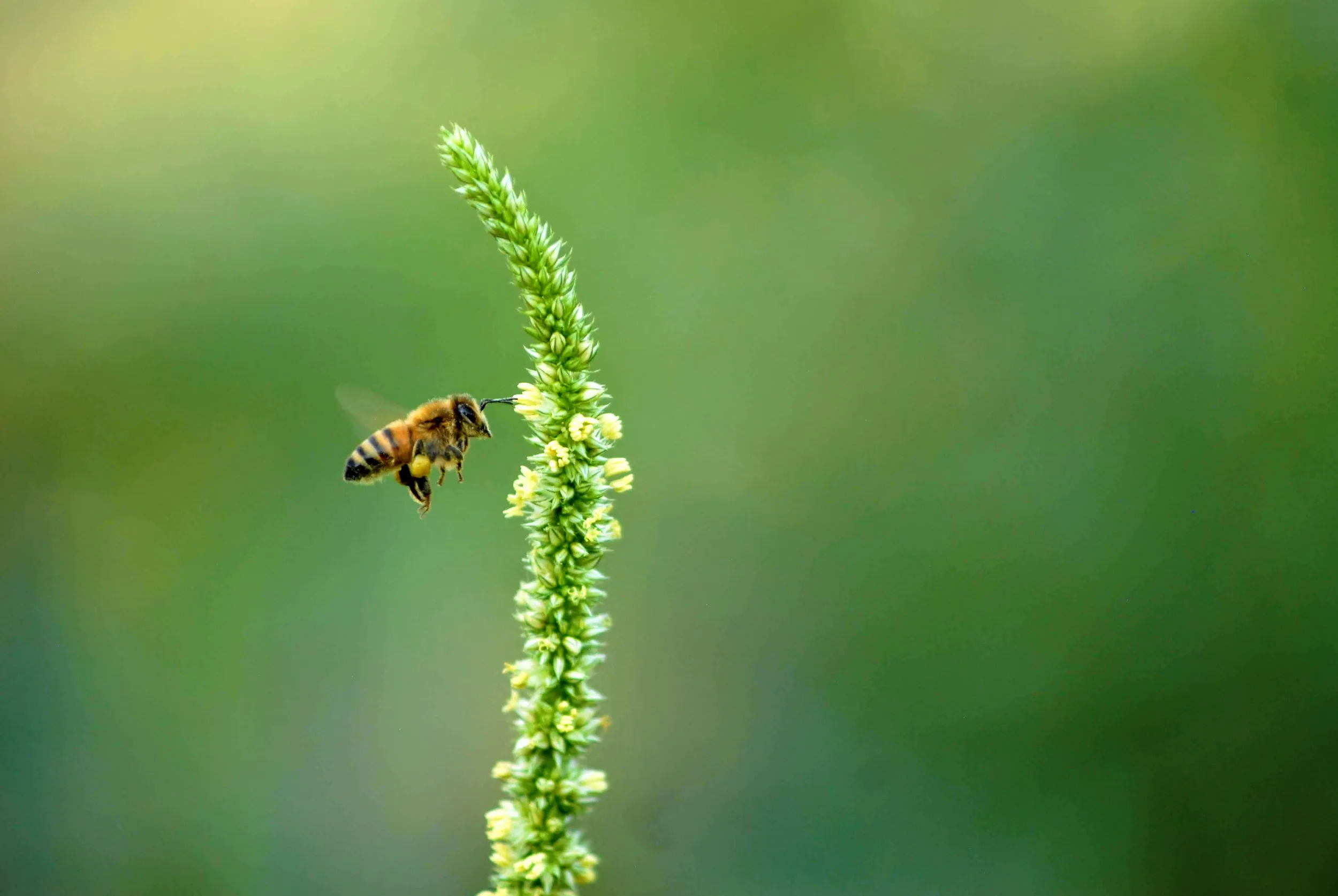
At about 20 days, the workers transition into the last stages of their lives. Having fully developed their wings and learned where their hive is located through orientation flights, the workers are now old enough to fly out of their hive. Most adult bees at this age become forager bees, and are the ones most often seen outside of the hive. These bees go after nectar, pollen, propolis, and water sources, bringing back samples for the rest of the hive to try out and sharing the location of these resources through their endearing waggle dances.
This is the stage where honeybees earn their reputation as one of the hardest-working and most efficient species out there. One worker bee can fly up to seven miles per flight at around 10-15 miles per hour. She visits nearly 150 flowers per trip, averaging around 15 trips in a day. In her lifetime, a single worker only produces 1/12th of a teaspoon of honey, and yet honeybee hives still produce anywhere from 25-300 lbs of honey per season. Incredibly, it takes around 2,000,000 (yes, that's two million!) flowers to make 1 pound of honey. This means that each forager travels a distance equivalent to circling the globe 3 times in her entire life, all while consuming less than a gram of honey. If that doesn't seem like insane engineering, we don't know what does!
Drones are the only male bees in the hive, and are the largest class of honeybee. They are easily identified by their large rounded eyes that meet in the center of their head, along with their much larger abdomens. Drones serve no purpose other than to heat the hive and fly out in search of a virgin queen to mate with. They do this by flying to drone congregation areas and waiting there until a virgin queen shows up. Once mated, the drone dies soon after, thus ending his duty to the honeybee world. As for the drones that don't get to mate, they either die naturally or are kicked out of the hive later in the year by the workers once resources become strained.
Drones don't have stingers, making them ideal candidates for handling and showing to others interested in honeybees. While some beekeepers consider them taxing on a colony, they play a vital role in honeybee reproduction and controlling local genetics.
Pictured Below:
Worker (left) (top) vs Drone (right) (bottom)
© BeekPedia. All Rights Reserved.
Images and videos provided courtesy of copyright owners.